


Pollinating species – that is, bees, butterflies, bats and more – are vital to human health. Without their natural pollinating action for our vegetables and fruits, we don’t eat!
In return, intentional human action is required for these pollinators to continue to function in a robust way. In this episode, we highlight the human activity that is aiding the health of threatened pollinating creatures.
From the WTJU in Charlottesville, an episode of “Natural History Note” from the archives describes the territory in the mountains of Mexico to which thousands of Monarch butterflies migrate every Fall.
Contributor Lilly Johns delivers an interview with JMU faculty members who use the Hillside on East Campus to provide a living laboratory of pollinator activity.
Girl Scouts from the Valley discuss their recent efforts to offer support to bees and bats. Isaac Bobrowitz bring that story.
And a professor from southern Germany describes citizens’ activity in a city that adjoins the Black Forest to care for plantings in public spaces there.
Dr. Leone Brown tagged a butterfly in Harrisonburg that was tracked all the way to Mexico. Zada Suddeth visits the garden in Harrisonburg where the journey began.
Contributor Zach Maguire attends a meeting of the Shenandoah Valley Beekeeping Association to learn about the organization’s successful mentorship program.
And Alex Baker reports on a gathering of blueberry growers in Keezletown from March 2026 where small farmers expressed optimism for the season ahead.
Reporters: Alex Baker, Isaac Bobrowitz, Lilly Johns, Zach Maguire, Zada Suddeth Co-Hosts: Kimberly Aikens, Lilly Johns, Tim Thomas
Sound: JMU Libraries Media Production Services
All music for the program is performed by the group “Many Nights Ahead” with recording by Gene Bowlen at Cross Keys Studios.
Graphic Artist: Annie McGowan
WEB EXTRAS:
Animal Migration Around the World
According to National Geographic, the hottest obsession on Swedish television is a live video stream of the Spring moose migration in the northern part of Sweden. For about 3 weeks each Spring, people around the world tune in for a chance to see one of the animals make its way across the territory of the northern border between Sweden and Norway. Over 9 million viewers can’t be wrong.
“Why millions are obsessed with Sweden's spring moose migration”
https://www.yahoo.com/lifestyle/articles/why-millions-watching-moose-cross-165613983.html
The Hemispheric Monarch Migration
Throughout North America each summer, monarch butterflies journey annually to an overwintering habitat in the high mountains of Mexico. Former Sweet Briar College Professor Lincoln Brower led the world in research about and protection of monarch butterfly habitat.
Tribute to Professor Lincoln Brower from Sweet Briar College
https://www.sbc.edu/live/news/2030-renowned-monarch-butterfly-expert-lincoln-brower
Monarch Migration Research at James Madison University
Ongoing research by James Madison University Biology Professor Leone Brown has tested new technology in tracking monarch migration. The New York Times and other media outlets covered the lessons learned from these scholarly efforts during Fall 2025.
“We Can Now Track Individual Monarch Butterflies. It’s a Revelation.” NY Times
https://www.nytimes.com/2025/11/17/science/monarch-butterfly-migration-tracking-sensor.html
From JMU News:
https://www.jmu.edu/news/2025/03/31-butterfly-research.shtml
From Breeze TV:
https://www.breezejmu.org/breezetv/local-monarchs-make-big-strides/video_d4465fdd-ef99-45f9-8c69-da7af6cf697a.html
In this episode of Ever Green we visit the garden of Harrisonburg resident Heather Griscom where Dr. Brown tagged “JMU 004,” one of the first 2 butterflies tracked to the overwintering site in Mexico during Nov. 2025. Heather shared these photos of her garden in Spring 2026:
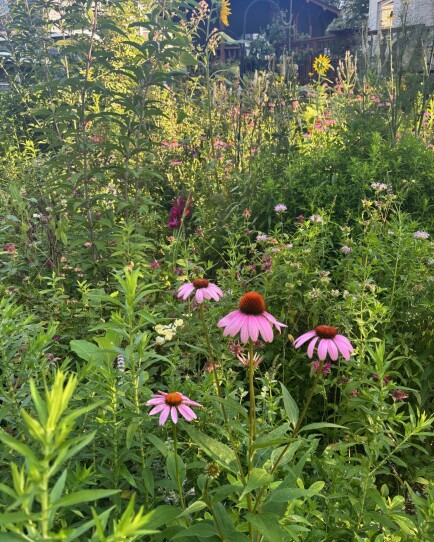
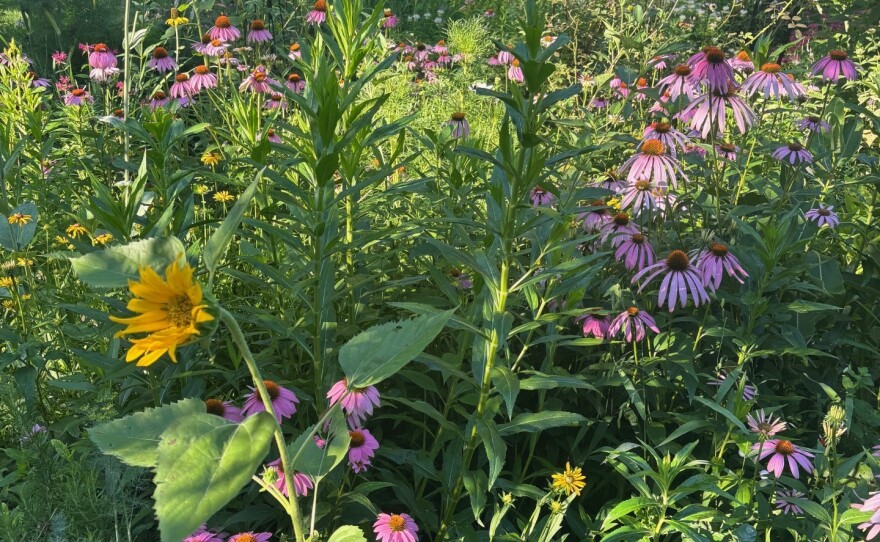
Monarchwatch.org hosts a citizen science website where you too can participate in butterfly monitoring and protection
https://www.monarchwatch.org/
Citizen Stewardship of Street Tree Beds in Public Spaces in Southern Germany
Dr. Kelly Baldwin Heid discusses her research on citizens caring for flowers and plants in public spaces – the effect on both the animals and plants as well as the humans.
You can read her research and learn more about her institution with these links:
From the Journal of Urban Ecology: “Citizen stewardship of street tree beds promotes urban biodiversity”
https://academic.oup.com/jue/article/12/1/juag003/8513213?login=true
Sustainability at the University of Freiburg
https://uni-freiburg.de/en/topics-in-focus/sustainability-at-the-university-of-freiburg/