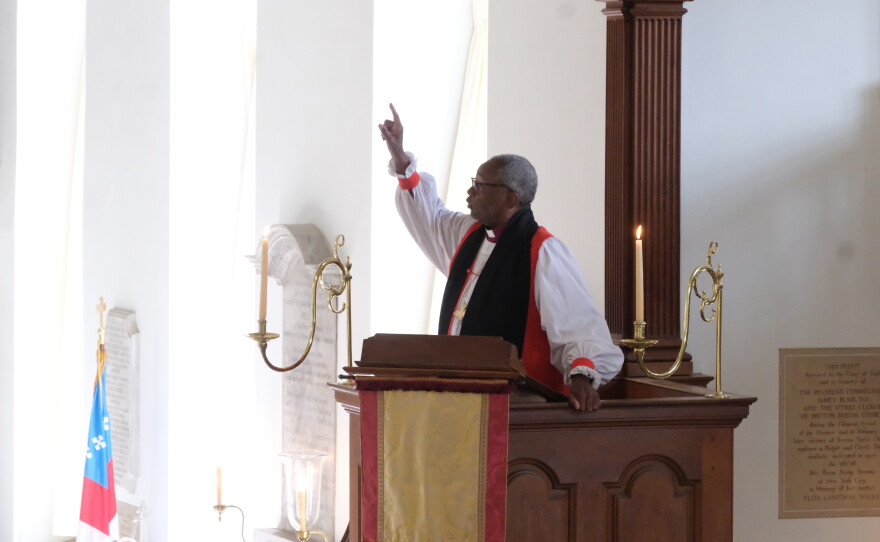
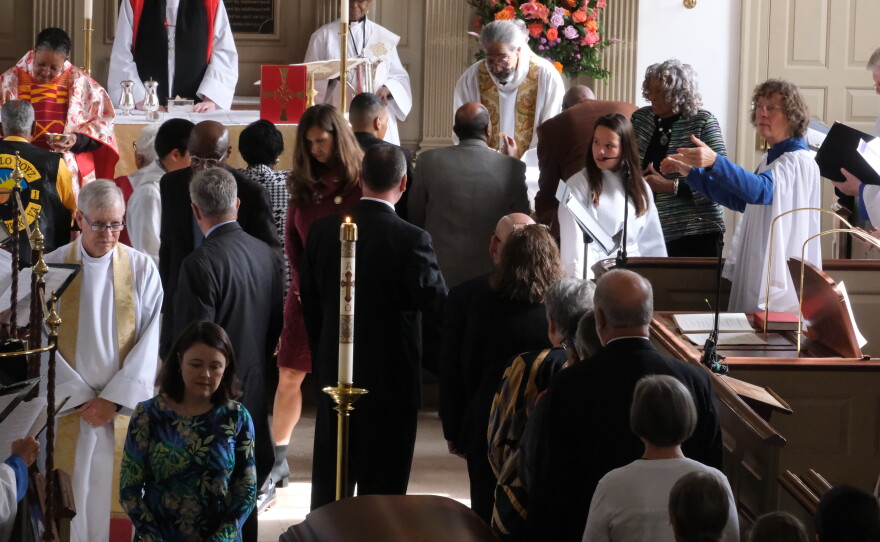
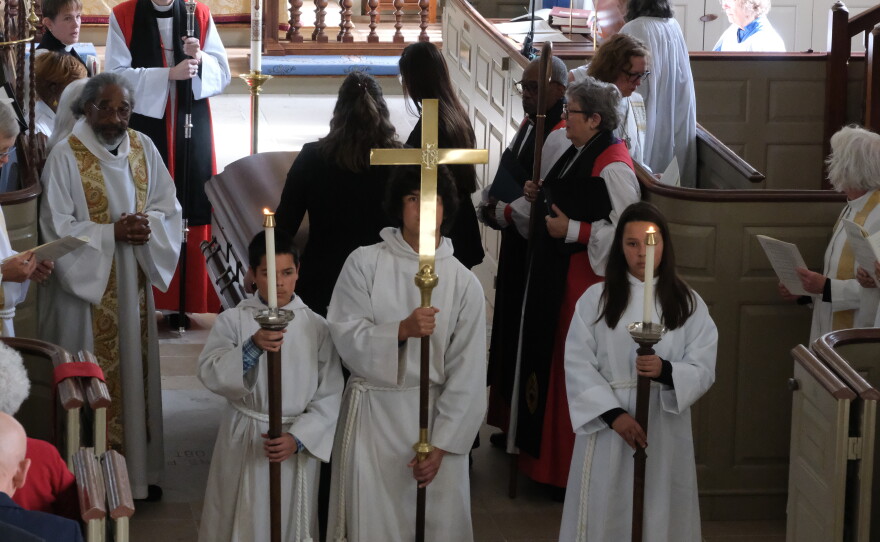
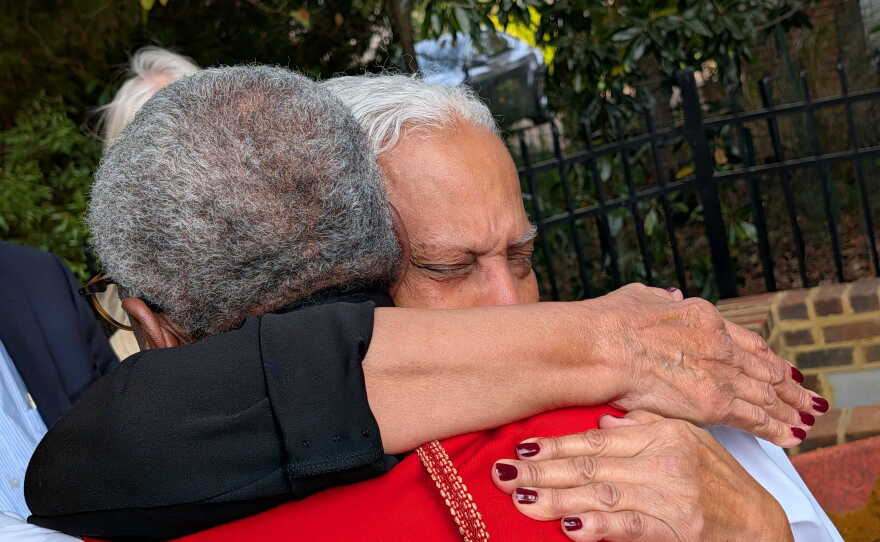
Words of lament and repentance resounded from Williamsburg’s Bruton Parish to James City County’s Kingsmill on Monday.
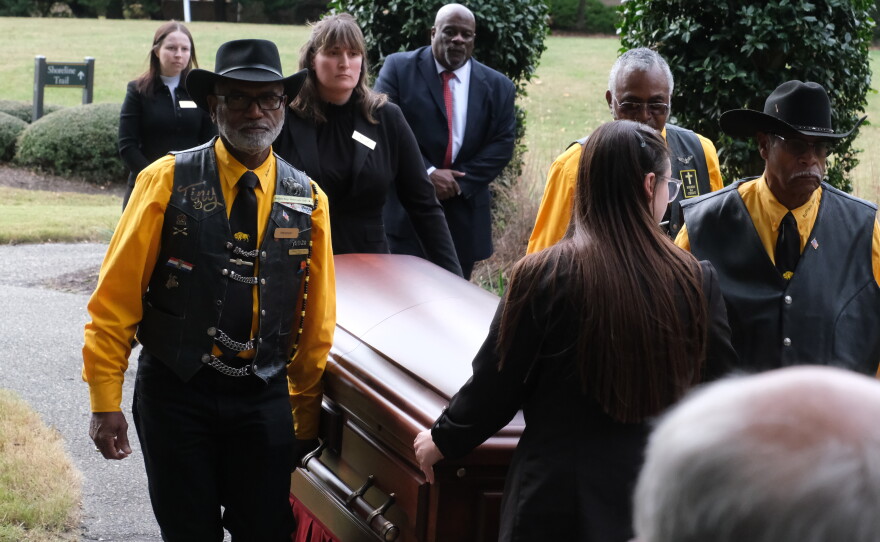
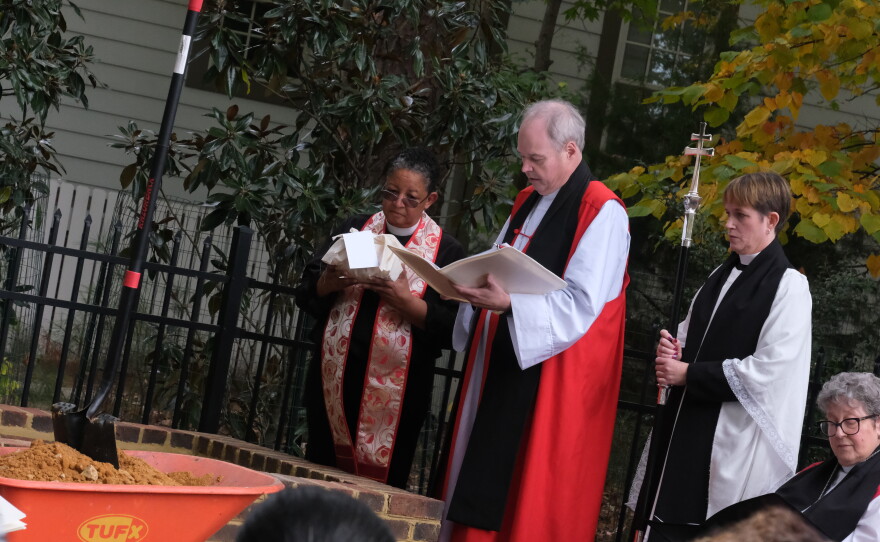
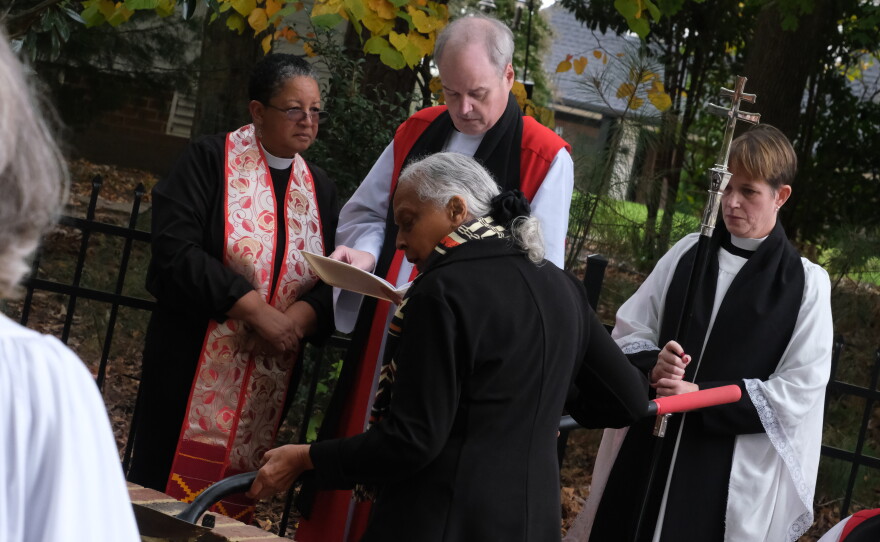
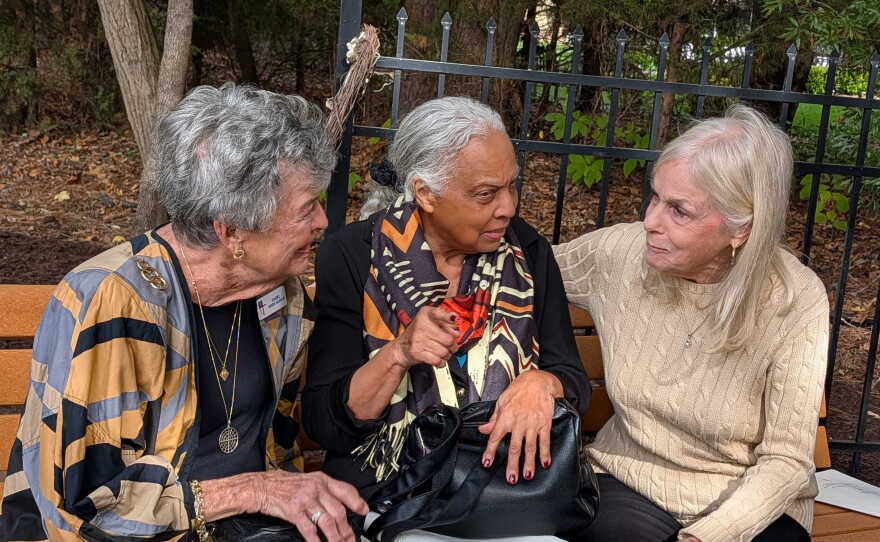
Leaders and members of the Episcopal Church joined with the Descendant community, Black residents with roots in the earliest days of Colonial Virginia, to reinter the remains of three enslaved African people near where they once lived. In life, the three worked at Kingsmill Plantation in the late 17th and early 18th centuries, and the church on Monday acknowledged how it profited from slavery.
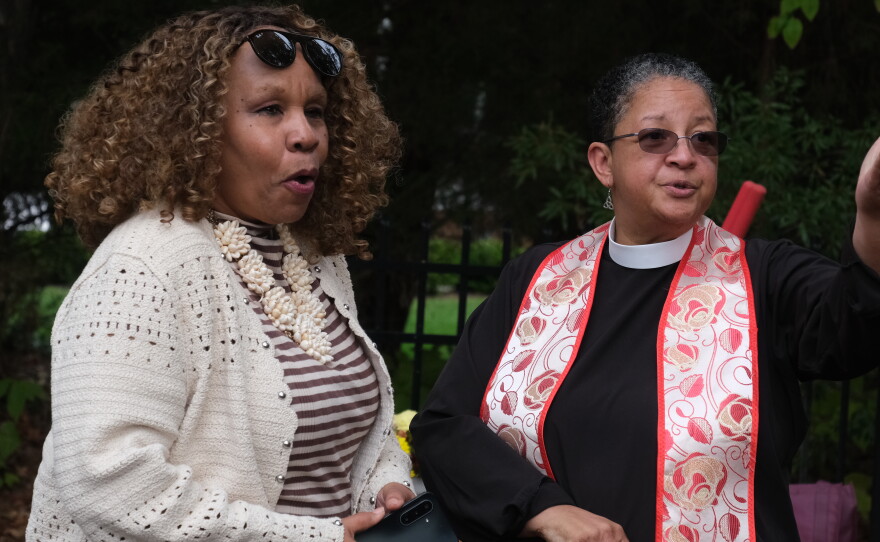
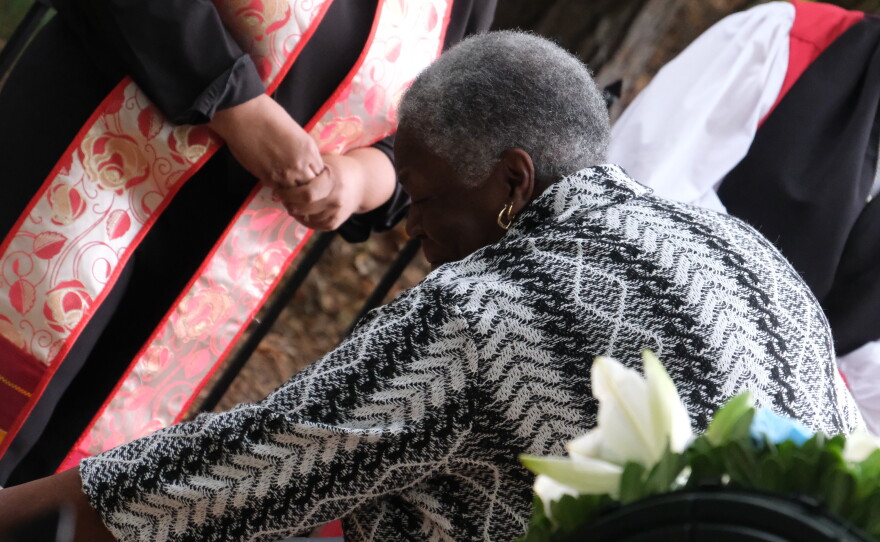
It was an emotional day for Loretta Burwell. She descends from Lewis Burwell, the British colonel who established a plantation and manor on the land once owned by his grandfather, Richard Kingsmill.
Generations of Burwell’s enslaved ancestors lived there before being taken in 1775 to Mecklenburg County. She lives in Atlanta and drove to Virginia for the burial service.
“This is an honor and a privilege and a public way for me to honor my ancestors who worked here on this plantation,” Burwell said.
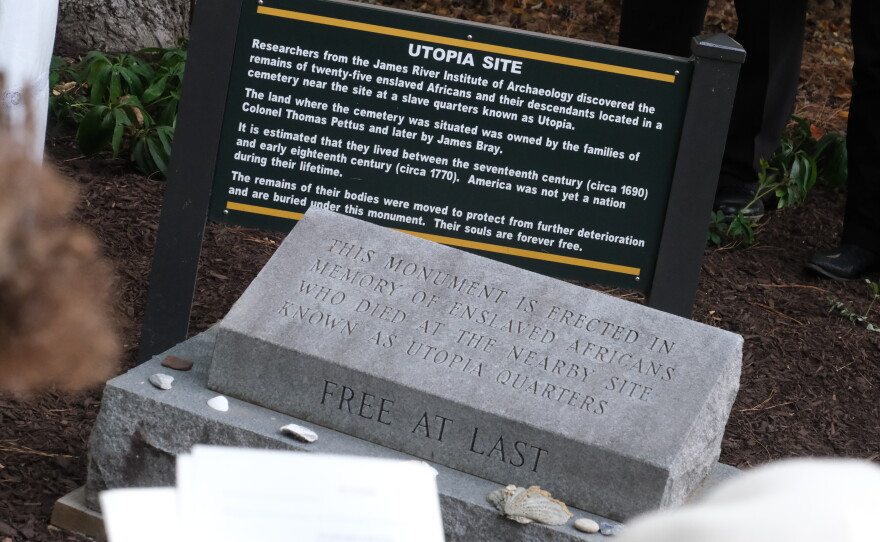
Jan Brown, a reverend with the Episcopal Diocese of Southern Virginia, began work in February to bring the three back home. Their remains were excavated from the Utopia Quarter, where many enslaved people from the nearby plantation lived. It’s now part of the gated Kingsmill community.
They’d rested in boxes at the Smithsonian Institute for years. Their original names unknown, they were given new names: Sia to a woman buried with care at Utopia; Obi to a young boy from whom only a tooth fleck and a Venetian bead necklace remained; Amara, meaning grace in Igbo, for a person whose remains were found in a refuse pit.
“We were able to, on that day, restore their humanity,” Brown said. “Then today, we were able to return them to the Earth.”
Brown said she’s working to bring 38 more ancestors from the nearby Pettus Plantation, though there are hundreds still in the ground at Kingsmill. She fears development plans by the resort owner, Escalante Golf, will build over them.

The Episcopal Church was once part of the Church of England. The two split after the American Revolution, but Episcopalians remain in full communion with Anglicans and the Archbishop of Canterbury is considered “first among equals” in the Anglican Communion.
James Blair, a Scottish-born former rector of Bruton Parish, was pivotal in institutionalizing slavery in Virginia. Parish records mention the church's enslavement of African people as well.
Though the Southern Virginia diocese first formally apologized for slavery and segregation in 2013, Brown said the Episcopal Church has never told the full truth. Others, such as the Descendant community, did so in its place.
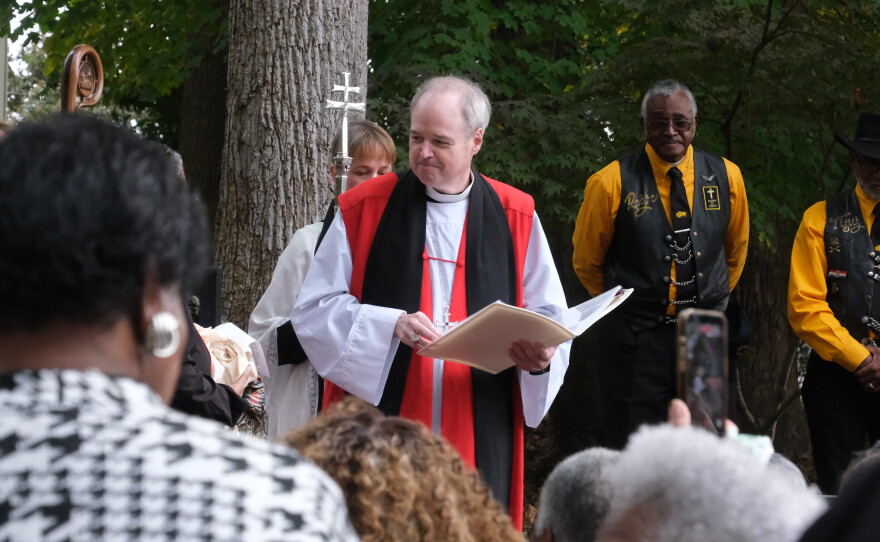
Rev. Sean Rowe, presiding bishop and primate of the Episcopal Church, led the service after liturgies from descendants such as Rev. Carlon Lassiter of St. John Baptist Church. Rowe and the parish repented for the historical enslavement for profit and inhumane treatment of Black members of its congregation.
“We lament today what was done to them,” Rowe said. “We lament what the church did and did not do; we lament the generations of silence; we lament that we took this long.”
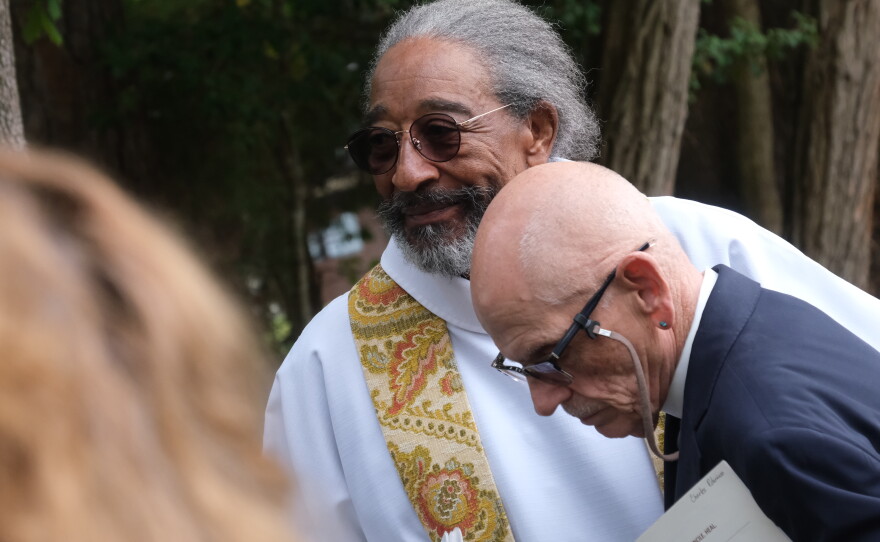
Rowe was joined by Rev. Michael Curry, the former presiding bishop who led the sermon at the 2018 wedding of British Prince Harry Mountbatten-Windsor and Meghan Markle.

Curry drew comparisons between the long struggle for freedom by Black people in the U.S., South Africa and around the world with the biblical example of Hebrew captives and exiles in Babylon. He said that while Sia, Obi, Amara and countless others never knew freedom, centuries later people of all backgrounds gathered to right wrongs and create a new future.
“We must do that, not just for ourselves alone,” Curry said, “but for generations of children and children yet unborn; for a country that we love that can be a better country than it is; for a world that God so loved that he gave his only begotten son.
“We must turn and learn and construct a new heaven and a new Earth where nobody is anybody’s slave, where everybody is a child of God.”