

When Elmwood Cemetery was established in 1853, the surrounding land in then-Norfolk County was mostly marsh and farmland.
The 50-acre property now sits at the intersection of several busy city thoroughfares, including Church Street and Princess Anne Road. But inside its gates, the greenery has remained.
Elmwood’s permanent residents include Union and Confederate soldiers, city and state dignitaries and victims of the 1855 outbreak of yellow fever.
These graves are among more than 182,000 across Norfolk’s eight historic municipal cemeteries, which span about 400 acres. The Bureau of Cemeteries is responsible for maintaining them all.
Operations manager John Dill said that, by ordinance, his crews have to hit each cemetery every two weeks to mow grass and trim trees and shrubs. And each site takes up to a week.
It’s somewhat of a Sisyphean task.
“As soon as you finish one, you're less than seven days (that) you really need to be back in,” Dill said. “That's just mowing and trimming. That has nothing to do with nothing else.”
That’s where volunteers come in. Dill said the city relies on volunteer help for work beyond basic landscaping.
The nonprofit Norfolk Society for Cemetery Conservation launched in 2013 to facilitate more active conservation and operates through a public-private partnership with the city.
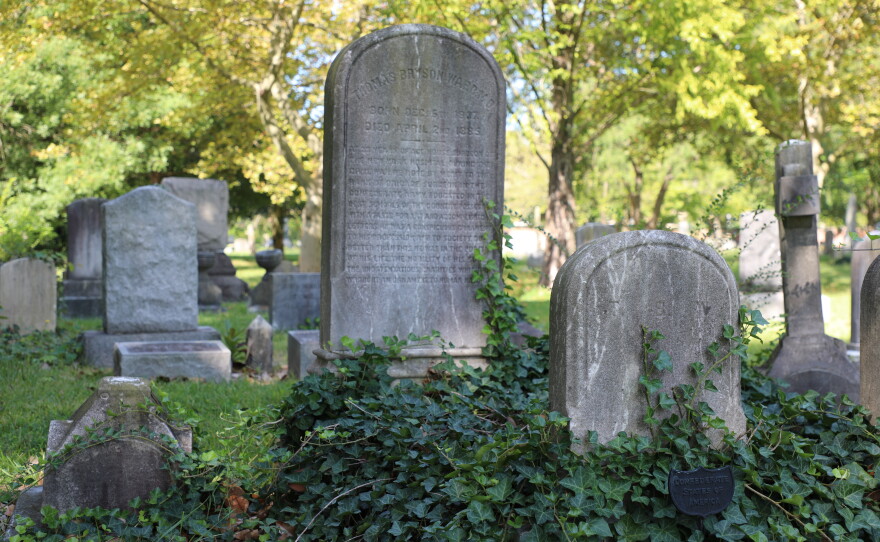
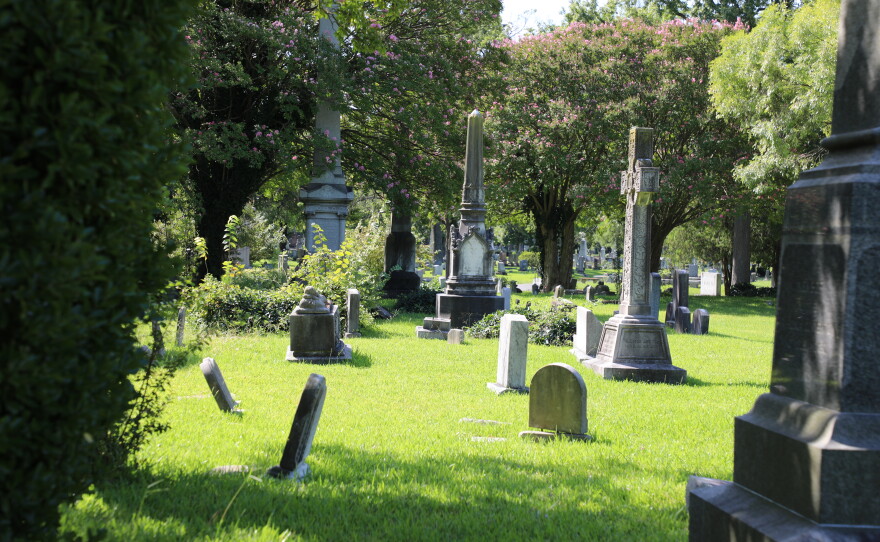
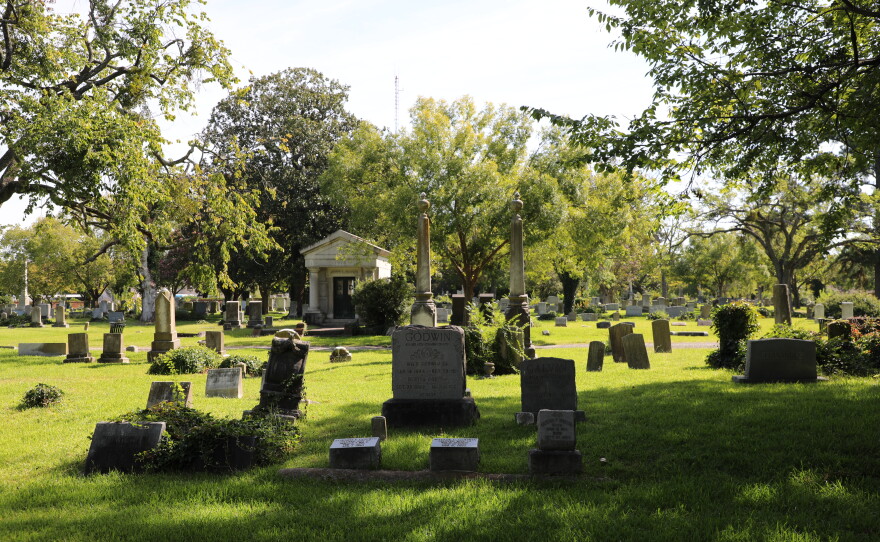
“These cemeteries represent the social, political, cultural and military history of our great city,” the society states on its website.
“Presently, the monuments, mausoleums, tombs and sculptures that define the character and historic value of these cemeteries are disappearing as a result of vandalism, weathering and the ravages of time.”
Diana Ramsey, volunteer coordinator, said the nonprofit hosts regular cleanups to remove extensive ivy and help repair and rewrite headstones.
The society lost a lot of volunteers after the COVID-19 pandemic.
“We’re just trying to build that up again,” Ramsey said.
Many volunteers are associated with the military, either through veterans groups or active duty.
On a toasty morning in August, a group from the USS Harry S. Truman arrived at Elmwood to remove ivy. They donned gloves and hedge shears to tackle a section of headstones at the back of the cemetery.
Sailor Elizabeth Reyes said she started volunteering a few months prior and finds it rewarding.
“We saw how much it impacts, like it helps out,” Reyes said. “It’s pretty cool, the before and after. It kind of humbles you a little bit.”
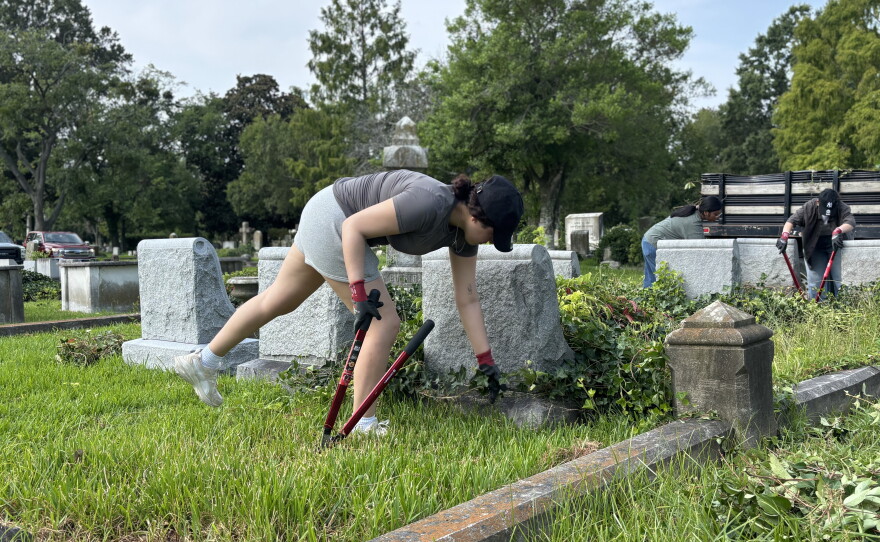
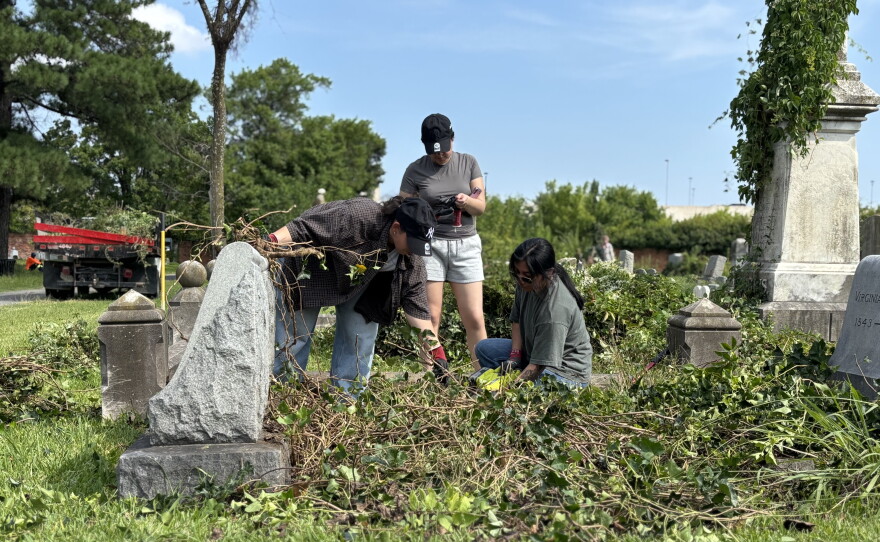
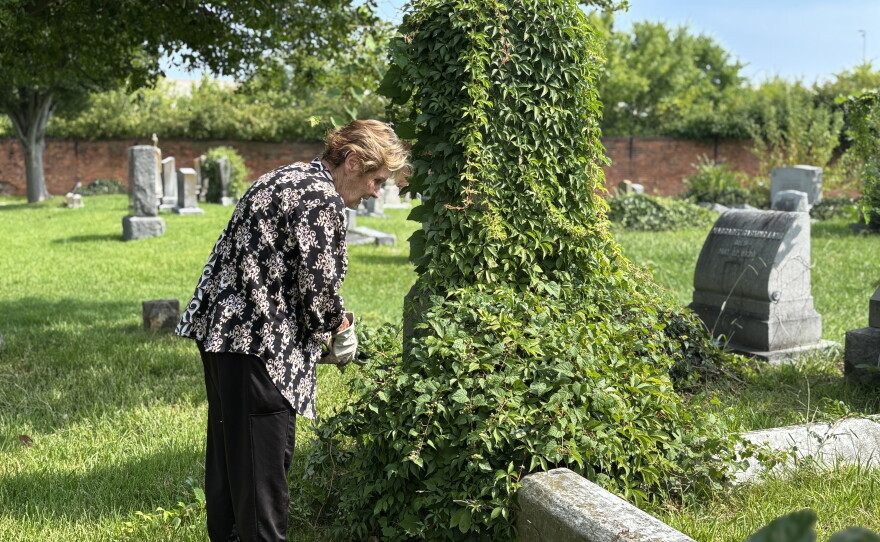
Ivy is a persistent and pernicious challenge at the cemeteries. But Dill said preserving the gravestones themselves is also tricky.
Newer stones tend to be made of granite, which is more durable. But Norfolk’s historic cemeteries, such as the second-oldest Elmwood, are full of marble stones in the Victorian style.
“Marble is the most porous thing, it gets very brittle, quick,” Dill said.
The city holds workshops to teach people how to properly clean the markers. Don’t use bleach, for example. Shoot for a product very neutral on the pH scale.
“You don’t want to get too crazy about cleaning a stone,” Dill said. “It’s like a good piece of furniture.”
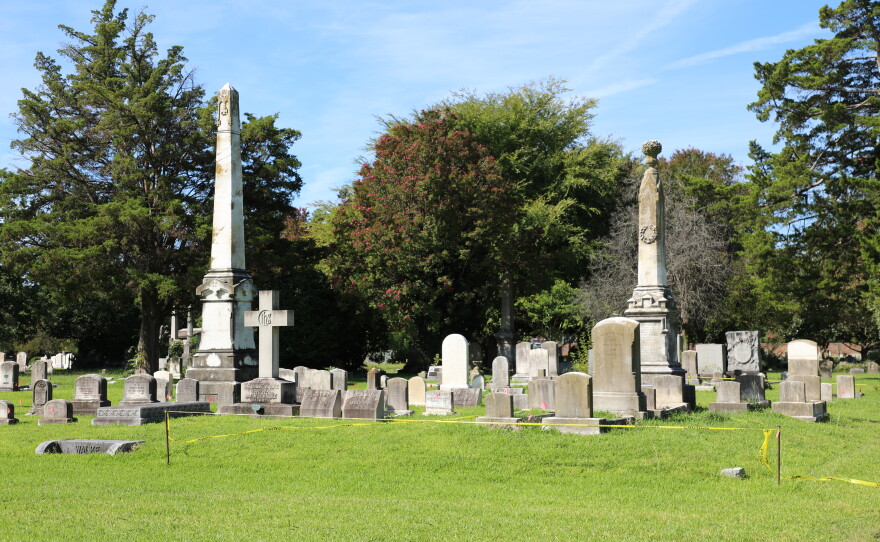
He walked over to a plot at Elmwood marked off by yellow caution tape. Some headstones were marked with small pink flags, denoting they were recently restored.
Previously, these stones were scattered across the ground, Dill said. Over time, they start decaying and tilting.
What visitors don’t see is how crowded it is underground, with only an inch typically between vaults.
“You take any cemetery, go down 18 inches, it's a parking lot,” Dill said.
That doesn’t leave much room to deal with shifts in the ground from storms or natural subsidence over time, he said.
There will always be more work to do. In the meantime, Dill said he loves to see more people using the cemetery as a public park.
And, of course, Halloween is approaching, which drives interest and walking tours around the cemeteries.
No, Dill hasn’t seen a ghost, he said. But the true stories can be just as intriguing.
The Norfolk Society for Cemetery Conservation will hold its annual 5K fundraiser, called “From Here to Eternity,” on Oct. 17.
